
So simple — yet full of life: bulgur may seem like a humble grain, but behind it lies an idea that has accompanied people for centuries. Wheat is briefly parboiled, then dried and cracked — a small processing step with a big impact: fresh harvest becomes a lasting staple. That’s exactly why bulgur became a quiet backbone of everyday cooking in many cuisines: reliable, long-lasting, and always ready at hand.
What makes bulgur fascinating is its practicality without ever feeling ordinary. It requires little cooking time, absorbs flavors instantly, and naturally brings a warm, slightly nutty depth. Depending on the grain size, it can turn out soft and juicy or firm with a pleasant bite — making it suitable for a wide range of uses: as a fluffy pilaf, a fresh kısır, a filling, an addition to dishes, or as a base for hearty pan and braised meals.
In short: bulgur isn’t a “trend,” but a smart piece of culinary culture — made for real life. Every spoonful carries a bit of craftsmanship, a touch of history, and that special ability to turn just a few ingredients into something truly well-rounded.
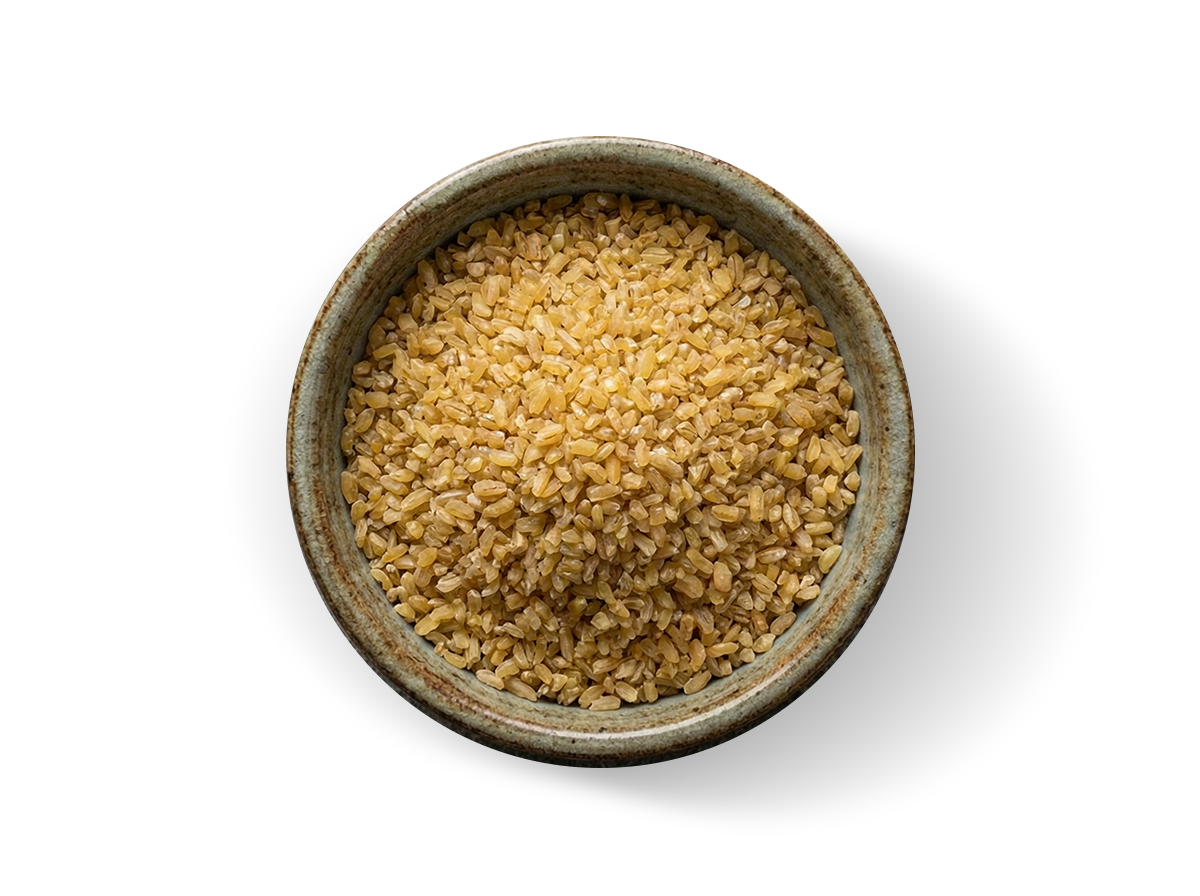
Meatball Bulgur (Köftelik Bulgur)
„Frikadellen“ bulgur is the „shaper“ among bulgur varieties: particularly fine, pale golden, and made for absorbing liquid quickly. After a short soaking time, the small grains turn into a smooth, easy-to-shape mass – not mushy, but just the right "grippy" texture. Its flavour remains mild and slightly nutty, which means it carries spices particularly well and allows other ingredients (onion, herbs, paprika, garlic) to take centre stage.
This is exactly how many classics of Turkish cuisine come about: Çiğ Köfte or İçli Köfte – spicy, aromatic, with that typical texture that you immediately recognise. And even beyond that, minced meat bulgur shows how versatile it is: as a base for vegetarian köfte and patties, for stuffed vegetables, as a binder in mince mixtures, or as a fine ingredient that makes sauces and fillings stable and juicy.
This frikadellen-bulgur is a real kitchen helper: quick to prepare, reliable in its consistency, and ideal when you want to create something from a few ingredients that perfectly combines form, bite, and flavour.
Pilaw-Bulgur
Pilaw bulgur is the „everyday hero“ among bulgur varieties: medium-fine, golden-brown, and perfectly balanced between fluffy and firm. When cooking, it reliably absorbs broth and spices, yet remains nicely granular – creating that distinctive pilaw character you immediately recognise. Its flavour is mild, lightly nutty, and transforms simple ingredients into a well-rounded, aromatic side dish in no time at all.
This is precisely how classic Bulgur Pilavı is made: with onions, tomato or pepper, sometimes with a little butter or olive oil – warm, fragrant, filling. And Pilaw-bulgur can do even more: as a base for vegetable stir-fries, as an accompaniment to meat and legume dishes, in one-pot meals, or as a „grainy“ alternative to rice in bowls and salads.
Pilaw-Bulgur guarantees reliable results: quick to cook, stable in shape and versatile – ideal when you want something uncomplicated but still with the taste of real cooking.
Başbaşı-Bulgur
Başbaşı-Bulgur is the „hearty“ one among bulgur varieties: extra coarse, with large, distinctive grains – almost like tiny wheat kernels that show real character in the pot. When cooking, it remains pleasingly firm to the bite and doesn't become soft or mushy too quickly. Its taste is mild, warm, and slightly nutty – which is why it carries strong flavours like onion, tomato, pepper, and broth particularly well, always seeming „honest“ and down-to-earth.
This is precisely why coarse bulgur is ideal for substantial dishes: for hearty bulgur pilafs (also with vegetables or meat) and for regional classics where this coarse, filling texture is intentionally desired. At the same time, it’s surprisingly versatile – coarse bulgur is also used in many cuisines for fillings and stews, wherever a grain is intended not just as a „side dish,“ but as a structural element.
Dere Başbaşı-Bulgur is therefore ideal if you're looking for a bulgur that remains noticeable: granular, full of flavour, and perfect for pilaf dishes with a real bite.
Bulgur for Çiğ Köfte
Çiğ-Köfte-Bulgur is the „kneading pro“ among bulgur varieties: extra fine, light golden, and made to absorb liquid lightning-fast. In a short time, it swells into a smooth, mouldable mass – precisely this consistency is the secret to the typical Çiğ-Köfte texture: soft, slightly grainy, yet compact and pleasantly „grippy“.
Its flavour remains mild and slightly nutty, allowing it to carry spices, paprika, herbs, onion, and tomato flavours particularly well. When kneaded, everything combines into a spicy, harmonious mixture that is instantly recognisable: intense in aroma, but not heavy.
Dere Bulgur for Çiğ Köfte is ideal for classic Çiğ Köfte – and just as practical for fine bulgur köfte, vegetarian patties or flavourful fillings, wherever you need reliable binding and a smooth, even texture.
Midyat-Bulgur
Midyat bulgur is the „goldilocks“ of bulgur varieties: with its medium grain size, it sits between köftelik and pilavlık – it cooks quickly but still has a noticeable bite. When cooking, it absorbs broth, tomato, paprika, and spices very well, remaining pleasantly loose and aromatic.
It is named after Midyat (Southeastern Turkey, Mardin province) – and it is precisely in this region that this type of bulgur is particularly valued. In Midyat, a bulgur pilaf with toasted vermicelli is a well-known classic that demonstrates how well this grain can be „grainy and juicy at the same time“.
Therefore, Midyat-Bulgur is ideal for pilaf, but also for soups and salads – anywhere where bulgur is not just meant to be a side dish, but truly brings structure and flavour.
Ceriş-Bulgur
Ceriş-Bulgur is the „hearty“ one among bulgur varieties: very coarsely broken durum wheat with a noticeable texture and a pleasantly „honest“ bite. Unlike finer bulgur, Ceriş is not always pre-cooked, depending on the manufacturer, which gives it a particularly original texture and rewards a little more time and patience when cooking.
This is precisely why Ceriş bulgur is a perfect fit for dishes where texture is explicitly desired: pilafs, hearty stews and soups – anywhere where the bulgur doesn't just „go along for the ride“ but gives the dish substance. This coarse variety is also popular as Jareesh in traditional Levantine-Arabian cuisine.
Dere Ceriş-Bulgur is therefore ideal if you're looking for bulgur that remains visible: coarse, flavour-friendly and perfect for hearty everyday cooking with substance.
Sefer-Kitel-Bulgur
Seferkitel-Bulgur is the „original“ type of wheat groats: it is made from dehulled, uncooked wheat which is then broken – that is, without the typical pre-cooking that many bulgur varieties undergo. This preserves its particularly distinct texture: pleasantly chewy, firm, and with a fuller, slightly nutty wheat flavour that carries spices and broths very well.
This is precisely why Sefer kitel bulgur is gladly used where structure matters: as a reliable base for İçli Köfte (the bulgur casing), for köfte/meatball mixtures, stuffed dishes and hearty meat dishes – but also as a robust side dish, in stews or pilaf-like preparations.
Bulgur – Preparation Tips
When you prepare bulgur, something very practical happens: dry grains transform quickly into a fluffy, fragrant side dish that is filling and holds spices wonderfully. You don't need any complicated technique for this – just a few basic rules to ensure it stays grainy and doesn't become mushy.
Sort grades: fine, medium or coarse.
Fine bulgur is the quick starter: ideal for salads like Kisir or as a quick side dish, often just soaking is enough. Medium bulgur is the all-rounder for pilafs and stir-fries. Coarse bulgur needs more liquid and time – it’s worth it for hearty pilafs, fillings and stews, as it retains a nice bite.
Not „boiling like rice“ – Bulgur likes the absorption method.
Bulgur becomes soft too quickly if it's swimming in too much water. Better: lightly fry it first, then pour hot broth/water over it, bring to a boil briefly, and let it steep on low heat. After that, let it rest for 10 minutes and loosen it with a fork.
Fluid in hand: proportion is everything.
Too much liquid will make the bulgur sticky. It's better to start sparingly, as bulgur absorbs liquid quickly. If it's still too firm at the end, add hot water a little at a time – not the other way around.
Timing salt and acid correctly.
Salt can be added to the cooking liquid. Acid (lemon, pomegranate molasses, vinegar) is better incorporated after swelling, especially in salads. This way, the bulgur remains looser and the aroma fresher.
For „Pilaf“: Toasting brings depth.
A quick step with a big effect: Toast the bulgur for 1–2 minutes in a little oil/butter with onion or noodles (şehriye). This adds nutty notes and makes the result „rounded“ without any extra effort.
Cooking mistakes with bulgur (and how to avoid them)
Wrong variety chosen (too soft / too hard):
Fine bulgur becomes extremely soft very quickly and is more suited to absorbing liquid (e.g. Kisir). Coarse bulgur needs more time and liquid. If the result isn't right, it's often just down to the grain size.
Too much water (mushy, sticky):
Bulgur must not „swim“. Start with less liquid and add hot water a little at a time if needed. It's hard to get too much out once it's in.
Overcooked (crumbly, mushy):
Bulgur usually needs a brief boil followed by simmering, not constant bubbling. Turn down the heat, put the lid on, and let it simmer.
No rest period scheduled (appears wet/compact):
After sourcing/cooking, leave to rest for 10 minutes. Only then fluff with a fork. Otherwise, it will remain „compressed“.
Unbroken (lumpy): If you don't fluff it at the end, bulgur quickly becomes like a block. Use a fork instead of a spoon, gently loosen it, don't stir it like porridge.