
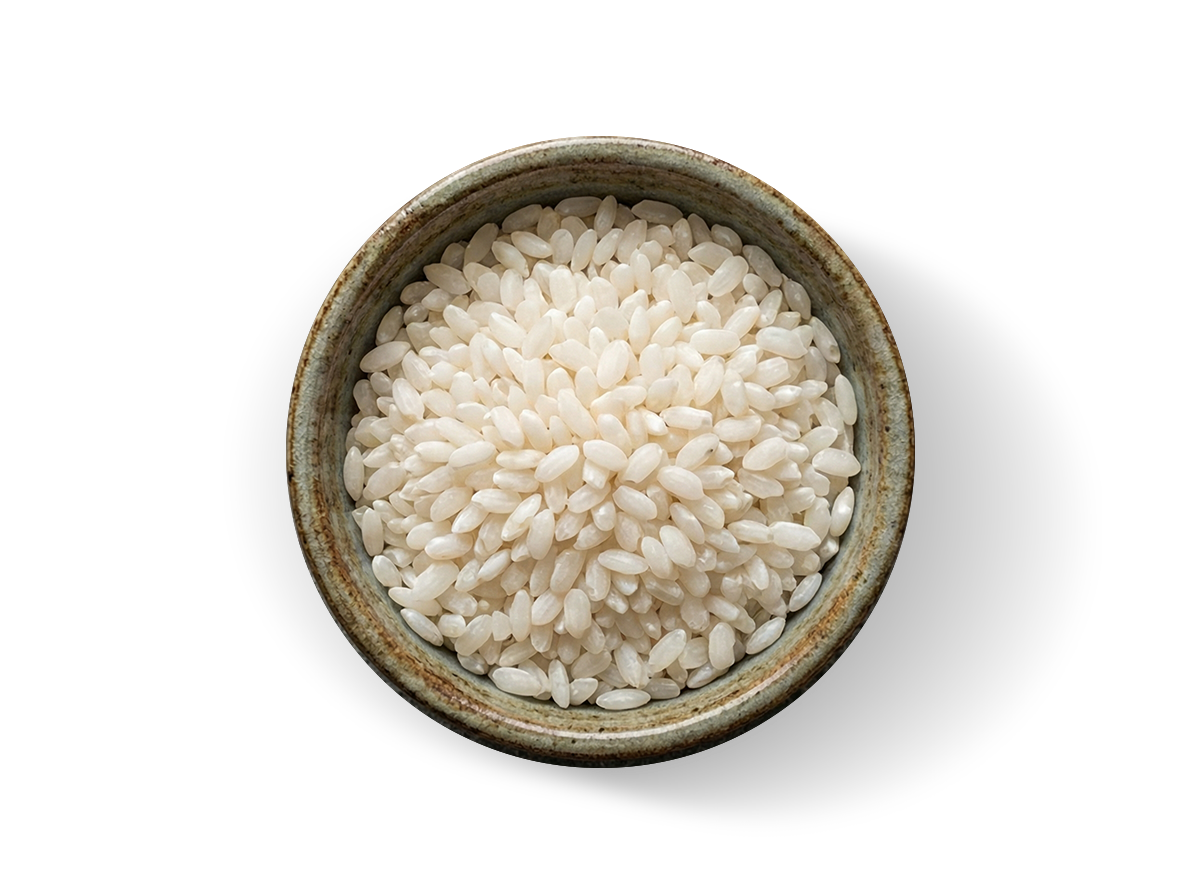
Basmati rice
Basmati rice is the „fragrance artist“ among rice varieties: long-grain, elegant, and renowned for its delicate, aromatic bouquet. When cooked, it remains loose and granular, with the grains separating beautifully – this is precisely what makes this rice so special. Its flavour is mild, slightly nutty, and at the same time so balanced that it perfectly carries spices and broths without overpowering them. This way, rice doesn't just become a side dish, but a silent star that enhances every meal.
This is precisely why Basmati is a perfect match for so many classics: as a fragrant accompaniment to curries and stews, as a base for pilaffs and rice dishes with vegetables, but also in light rice salads or as a fluffy foundation for bowls. It absorbs sauces, remains stable in shape, and brings that „light“ texture that you instantly recognise – aromatic, but never heavy.
This Basmati rice is a reliable kitchen companion: quick and uncomplicated, with consistently good results – ideal when rice needs to be fluffy, fragrant, and simply perfect.
Pilaf rice
Pilaw rice is the „classic“ for the perfect rice dish: rounder than basmati, with just the right thickness to become tender and succulent when cooked – without sticking. The grains absorb butter or olive oil and broth wonderfully, becoming aromatic and glossy, and bring that typical pilaw texture: loose, but with a pleasant „melt-in-the-mouth“ quality. This is precisely why a good pilaw never tastes dry – but rather full, rounded, and comforting.
This is how the famous Turkish pilaf is made: first lightly roasted, then gently cooked – as a fragrant side dish for meat, vegetables and pulses, or as a standalone dish with chickpeas, vermicelli or vegetables. Pilaf rice is a real team player: it combines flavours, carries sauces and turns a few ingredients into a meal that tastes like real home cooking.
Dere Pilaw Rice stands for reliable results: even grain size, good absorption of liquid, and a pilaw that succeeds if you like it classic, aromatic, and pleasantly moist.
Dolma-Reis
Dolma-Rice is the „filling professional“ among rice varieties: rather short-grain, with just the right strength to gently swell during cooking and absorb the flavours of the filling. It doesn't simply become soft – it becomes creamy, juicy and binding. This is precisely the key to a filling that doesn't fall apart, but holds together nicely at the end while remaining loose.
This is how classics like Yaprak Sarma and Dolma in peppers, courgettes or aubergines are made: with herbs, onions, spices and olive oil, rice becomes an aromatic centre that holds everything together. Dolma rice absorbs tomato, lemon, pepper and herbs particularly well – and gives the filling that typical, round texture that you recognise immediately.
Dere Dolma-Reis is made for: reliable in swelling, flavour-friendly and ideal if you want fillings that turn out juicy, hold their shape well and taste like real home cooking.
Tosya-Reis
Tosya Reis is the „flavour and graininess professional“ among rice varieties: mostly medium to round grain, with a structure that swells beautifully when cooked without falling apart immediately. The result is a rice that remains both tender and pleasantly firm – it's precisely this balance that makes it so popular when rice isn't just a side dish but is meant to have character.
In Turkish cuisine, Tosya rice is particularly popular for pilaf: whether classic with butter, with orzo (şehriye), with stews or as an accompaniment to meat and vegetable dishes. It absorbs broth, butter, and spices very well, developing that round, „full“ flavour that you know from really good homemade pilaf. It's also convincing in rice pans or as a base for simple everyday dishes because it cooks reliably and retains a lovely texture.
Dere Tosya-Reis embodies precisely this strength: it's flavour-friendly, cooks evenly, and is ideal if you want a pilav that appears fluffy yet has substance – and tastes like real Turkish cuisine.
Rice – Preparation Tips
When you cook rice, something simple yet crucial happens: dry grains transform into the base for countless dishes – from fluffy pilaf to creamy risotto. For it to turn out right every time, you don't need professional tricks – just a few basic rules.
First wash, then cook. Rinse the rice (especially for pilaff and side-dish rice) in a sieve under cold water until the water runs clearer. This removes excess starch – the rice becomes fluffier and sticks less.
The water ratio is key (and the type of rice). As a rough guide: long-grain/Basmati/Jasmine rice requires less water to keep it fluffy. Round-grain/sushi/risotto rice needs more liquid, or liquid added in stages, to make it creamy. If you're unsure, it's better to start with slightly less water – you can almost always add more.
Don't stir too much – it's better to let it rest. Once the rice is simmering, turn down the heat, put on the lid, and try not to stir constantly. After cooking, let it rest for 5–10 minutes, then loosen it with a fork. This makes the biggest difference to the texture.
Salt, Fat & Roasting: Building flavour. A pinch of salt is almost always involved. For pilaf: briefly toast the rice in butter/oil with onion/orzo, then add water/broth – this gives it depth instead of just being a „side dish“.
Lid discipline & heat control. Keep the lid closed as much as possible during cooking (steam is your second chef). Too much heat makes the bottom burn quickly and the top stays hard – it’s better to simmer gently.
Storage: cool quickly, eat safely. Don't leave cooked rice out warm for hours: cool it down quickly, put it in the fridge and heat it thoroughly when reheating. That way, it stays not only tasty but also safe to eat.
Nutritional Tip: Cleverly Combine Rice
Rice is primarily an energy source – and that's precisely why it becomes „smarter“ when you combine it with the right partners: protein + vegetables make rice a much more balanced meal and keep you feeling fuller for longer. Practical combinations: rice with yoghurt/quark (e.g. Cacık), with legumes (lentils, beans, chickpeas), with egg or fish – along with vitamin-rich vegetables like peppers, broccoli or tomatoes. This way, your plate gets more nutritional depth without complicated cooking.
Common cooking pitfalls when making rice
Won't it just... stay hard? Usually, it's down to too little water, too short a cooking time, or the lid being opened too often during cooking (steam escapes). Very „old“ rice can also take a bit longer.
Too mushy / sticky? Often it's too much water or cooked for too long. For side dish rice, try this: wash it beforehand, simmer gently, let it rest at the end – and don't stir constantly.
Burning at the bottom? Too high heat or too little liquid. As soon as it boils: turn down the heat, put on the lid, it's better to simmer gently for longer.
Unevenly cooked (hard on top, soft on the bottom)? Pot too hot or steam management isn't right. Rice needs consistent, low heat and a well-fitting lid.
Better tolerated / easier on the stomach: Cook rice thoroughly and keep it fairly plain; those with sensitive stomachs often combine it with yoghurt or mild spices. Cooled and reheated rice is often „more stable“ in texture.