
Small, round – and surprisingly „high-tech“: Hardly any vegetable shows so clearly how much timing determines taste. Peas are naturally slightly sweet because they store a lot of sugar. But after harvesting, something exciting happens: this sugar quickly turns into starch. That's why peas taste best when processed very fresh – or when they're flash-frozen immediately after harvesting. This is precisely why frozen peas are often more flavourful than „fresh“ peas that have already been in transit for days.
Culinary speaking, peas are true chameleons: tender as a side dish, crunchy in salads, creamy as a purée, robust in soups and stews – and as dried peas, they provide that typical, creamy texture that immediately tastes like home cooking. What's more: peas not only bring colour to the plate, but also substance – they make dishes more filling without feeling heavy.
In short: peas aren't just „green“ – they're a small quality product where freshness, processing, and variety make all the difference.
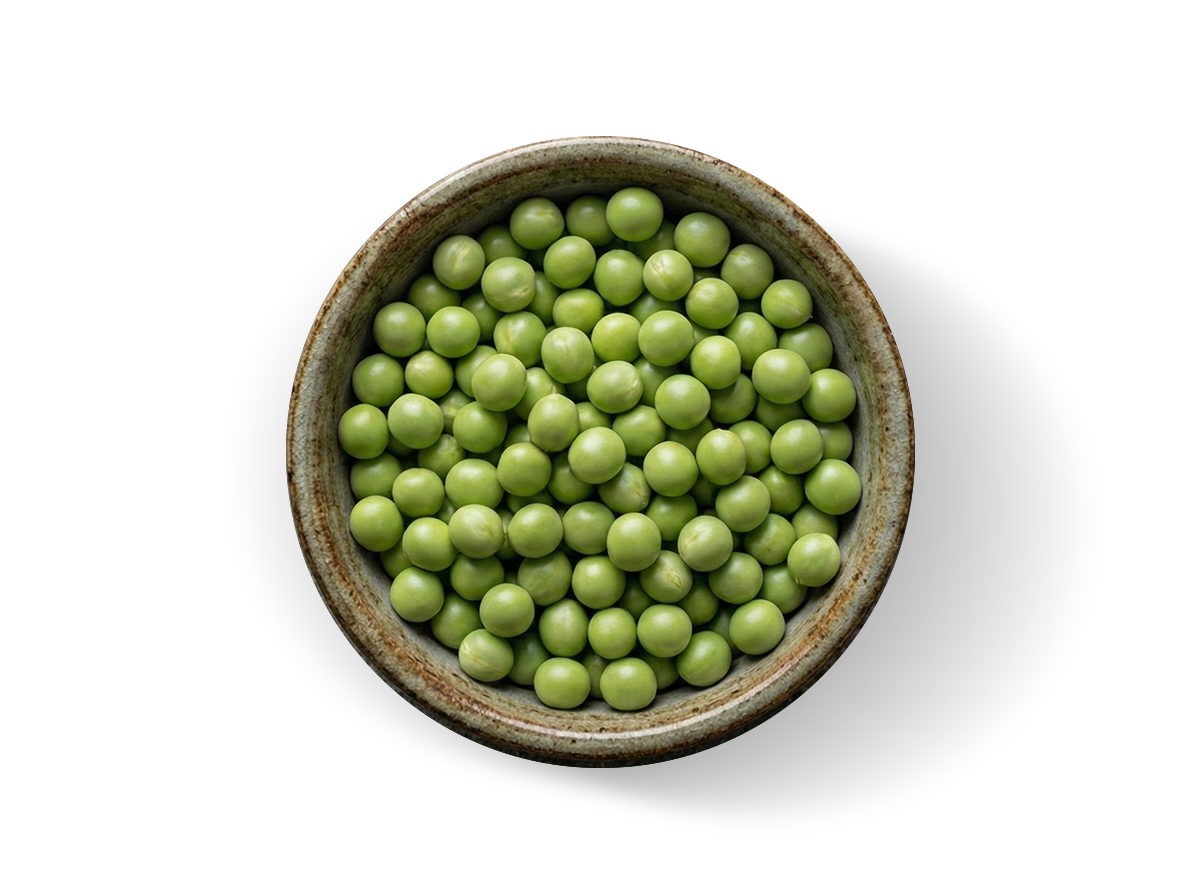
Peas – Preparation Tips
When you cook peas, something wonderful happens: small spheres transform into a dish in just a few minutes that tastes fresh, slightly sweet, and really „green“. To make this work, you don't need great culinary skill – just a few basic rules to make your life easier.
Nutrient Tip: Smartly Combine Peas
Peas aren't just „green and mild“ – they pack several nutritional strengths: plant-based protein, fibre, and above all, folate (Vitamin B9). Therefore, a particularly clever kitchen trick is not just a Vitamin C combination, but a double boost of protein + fat:
Supplementing protein smartly: Peas provide a lot of lysine – together with cereals (rice, bulgur, pasta, bread) this results in a more complete amino acid profile.
Fat makes it more effective: A shot of olive oil, a knob of butter or a spoonful of yoghurt helps to „carry“ fat-soluble plant compounds better – and makes pea dishes more flavourful and satisfying.
Practical estates: Peas + rice/bulgur (pilaff), peas + pasta, peas + potatoes with olive oil/butter, pea salad with herbs and dressing.
Common cooking pitfalls with peas
Doesn't it get soft?
With dried peas, it's often down to insufficient cooking time, a lack of soaking, or very old produce. Hard water can also slow down the softening process. (Fresh/frozen peas, on the other hand, usually only need a few minutes.)
Too muddy / colourless?
Classic: overcookedt or too much heat. Peas cook quickly – it’s better to try them sooner. For a vibrant green: cook briefly and don’t leave them standing in the hot pot forever.
Taste „floury“ or flat?
Peas lose their flavour if boiled for too long in lots of water. Better to steam them or cook them with a little liquid. For soup, it helps to simmer slowly with onion, bay leaf and carrot – this adds depth.
Peel is tough / stays hard (with dried peas)?
Too little time or the wrong variety. For really creamy soups, split/husked peas are often the better choice.
Better tolerated
Cook slowly and thoroughly. If you have a sensitive stomach, cook with caraway seeds, fennel, or ginger – and for dried peas, soak them first (or rinse them thoroughly).