
So small – yet full of history: Lentils are tiny grains that have accompanied humans for a very long time. They were already being cultivated around 10,000 years ago in regions like Egypt and Asia Minor. In the Mediterranean and Middle East, archaeological finds even show that (wild) lentils were among the earliest agriculture.
What's fascinating is that for many cultures, lentils weren't „just food“ but a true everyday staple – reliable, long-lasting, and filling. And they can do more than just shine on the plate: in nature, they are real soil helpers. Their roots work with bacteria that fix nitrogen from the air. This can make the soil more fertile and helps agriculture need less fertiliser.
And in the kitchen, lentils are real transformers: as a classic stew, as flour for hearty doughs and crackers, or cooked as a binder for veggie burgers. In short: these little grains pack a surprising punch – and that's exactly what makes their world so exciting.
Tips for preparation
When you cook lentils, something beautiful happens: small, hard grains are transformed into a dish with real character in a short amount of time. To make this work, you don't need great culinary skill – just a few basic rules to make your life easier.
First wash, then cook. Always rinse lentils under cold water in a sieve. And very importantly: never eat them raw. Legumes must always be cooked.
Cook something easily digestible. If you have a sensitive stomach: add caraway, fennel, or ginger to the pot.
Seasoning with salt and acid at the right time. You can add salt during cooking, or at the end if you want to be sure. Add vinegar/lemon right at the very end, otherwise the lentils will cook more slowly.
Soaking: Optional, sometimes beneficial. Many varieties do not require it. Lentils often benefit from an overnight soak (shorter cooking time, often easier to digest). For very busy days, a pressure cooker is helpful.
Good combinations. Lentils like strong partners: in a salad, for example, feta or salmon; in winter, creamy mustard lentils are a good choice. And for better protein: combine with whole grains (bread/rice) or eggs.
Red lentils
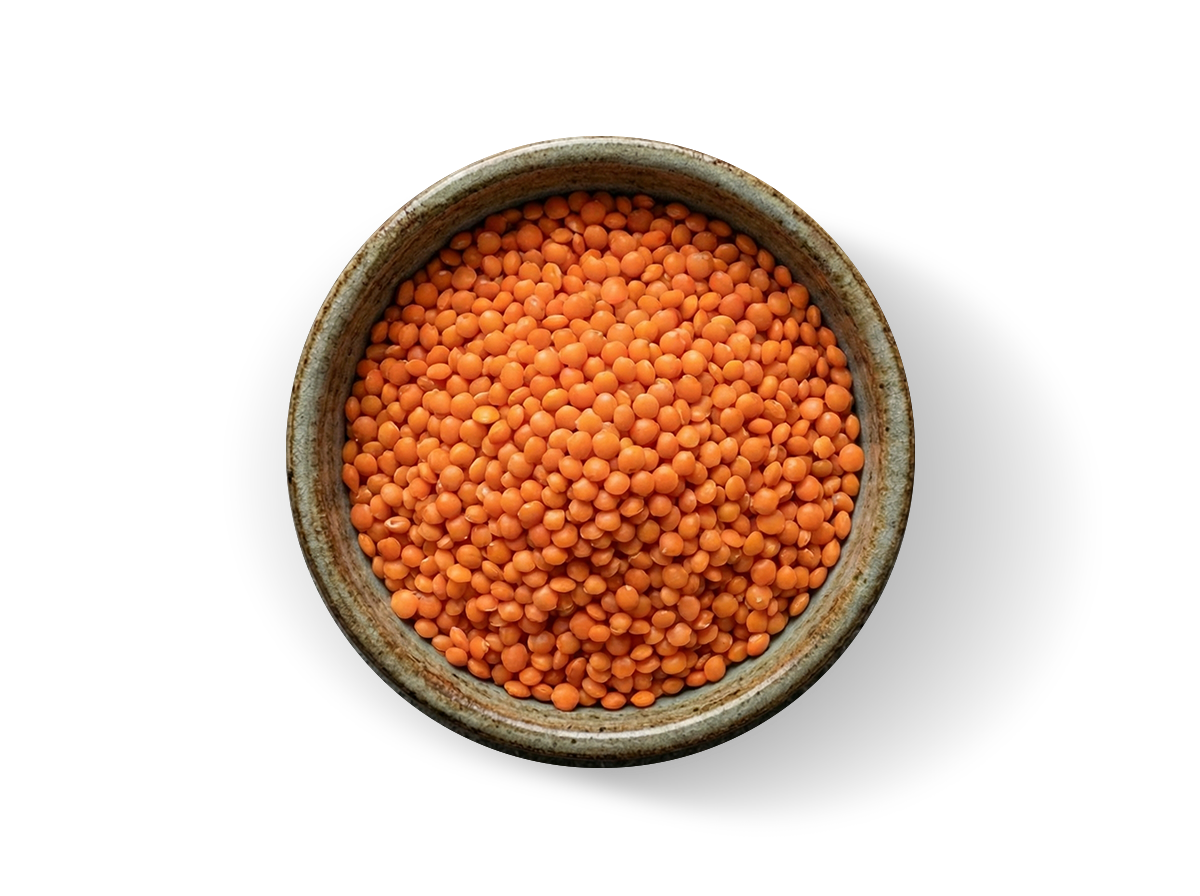
Red lentils are the „quick starters“ among legumes: grey-brown on the outside, a bright orange-red on the inside – and after a few minutes in the pot, they turn into a golden-yellow, creamy base. Their flavour remains mild and slightly sweet, which means they take on spices particularly well. And because they break down quickly, this velvety consistency, which you immediately recognise, develops without much effort.
This is often how the world-famous Turkish lentil soup (Mercimek Çorbası) is made: warm, spicy, smooth – a classic that shows just how much can be packed into a tiny bean. Its versatility is evident every day in a wide variety of cuisines: as a velvety soup, a flavourful dal, a creamy dip, a rich sauce – or as a base for patties and balls.
These red lentils are vegan/vegetarian, high in protein, high in fibre and a source of iron, making them ideal for a plant-based diet.
Yellow lentils
Yellow lentils are the quiet stars in the pot: they are usually peeled plate lentils - without the skin, but all the more convenient to cook. They have a floury, creamy consistency, taste mildly nutty and remain a beautiful yellow colour even after cooking. This is exactly why they are so popular in Indian cuisine: for dal and curry, where they absorb spices like a sponge and create a velvety base at the same time.
Yellow lentils are a perfect fit for a plant-based diet: vegan/vegetarian, high in protein, a source of iron and a source of fibre. In short: mild in taste – strong in nutrients and versatile in everyday cooking.
Green lentils
Green lentils are the grainy character heads among lentils: they are usually used unpeeled and retain their shape when cooked - which is precisely why they remain pleasantly firm to the bite. The flavour is mildly nutty and a little spicier than peeled varieties. Perfect for dishes in which every lentil needs to „play its part“: Salads, bowls, side dishes, but also hearty stews. And the best thing is that small green lentils are often cooked in just 20-30 minutes - usually without soaking.
The green lentils are vegan and vegetarian – ideal for a plant-based diet – and also a good plant-based source of protein, iron and fibre.
Nutrient Tip: Cleverly Combine Iron
Lentils are a plant-based source of iron. A simple kitchen trick makes them even „smarter“: vitamin C supports iron absorption. Practical combinations: peppers, tomatoes, parsley - or a squeeze of lemon at the end (really only at the end, because of the cooking time).
Common Cooking Pitfalls
Don't become soft? Often it's down to acid too early (vinegar/lemon) or very old lentils.
Too mushy? Especially with red lentils: keep an eye on the time and taste them sooner rather than later.
Better tolerated: Spices like caraway/fennel/ginger + optional soaking (especially for puy lentils).