
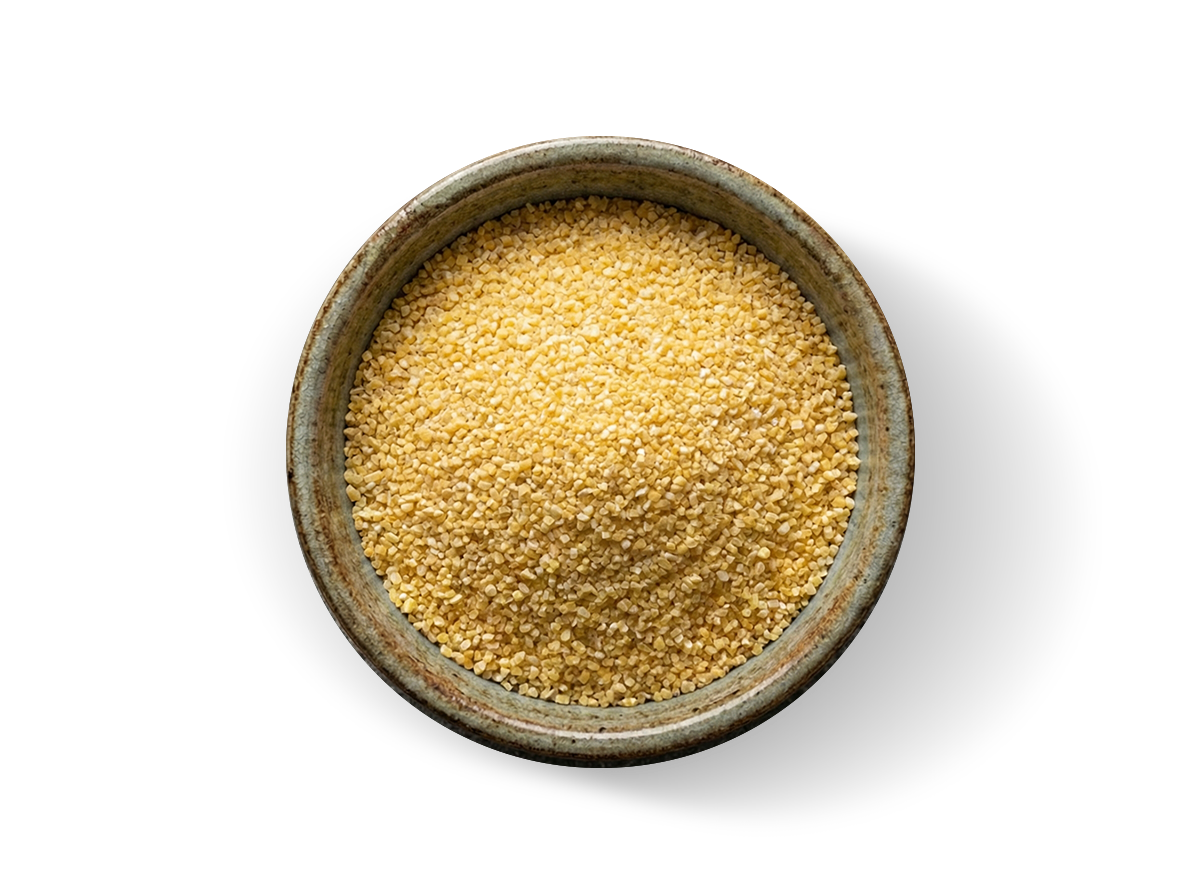
Semolina in the kitchen
And in the kitchen, semolina is a true transformer: as a creamy porridge, as a golden base for bakes and desserts, as a thickener for soups and sauces, as a base for dumplings, gnocchi or quenelles – and of course, as the heart of many doughs and pasta.
Fine durum wheat semolina
Fine durum wheat semolina is the „velvet maker“ among semolina types: pale, very finely granulated, and made to absorb liquid quickly. After just a short swelling or cooking time, it turns into a smooth, creamy mass – not heavy, but pleasantly „round“ in the mouthfeel. In terms of taste, it remains mild, slightly nutty, and gives spices, vanilla, citrus, or butter flavours exactly the stage they need.
This is precisely how many instantly recognisable classics are made: semolina pudding, İrmik helvası, revani, or delicate semolina dumplings in soup. And even beyond desserts, fine durum wheat semolina is surprisingly practical: as a binder for fillings, a stabiliser in doughs, or an ingredient that holds mixtures (e.g. for patties/köfte) together cleanly without dominating the flavour.
This fine-structured durum wheat semolina is ideal when you want a uniform, smooth texture: quick, reliable and perfect for anything that needs to be creamy, compact or finely bound.
Coarse durum wheat semolina
Coarse durum wheat semolina is the „biter“: stronger in its grain, golden in appearance – and precisely for this reason, it remains noticeably grainy when cooked. It reliably absorbs liquid, becoming soft in the process, but retaining its structure. The result: a pleasant „grain feel“ that doesn't fall apart and gives dishes character.
This is precisely why coarse semolina is valued: for İrmik Pilavı (semolina pilaf), for savoury side dishes, casseroles, and anywhere you want a filling, stable texture. Even in desserts (e.g., semolina halva), the coarse grain brings that special, slightly granular „artisanal“ texture – and as dusting semolina, it's also effective: for dusting dough pieces and baking trays so nothing sticks and the surface stays nicely grippy.
Durum wheat semolina in coarse form is ideal when semolina should not just be „creamy“, but tangible and hearty - uncomplicated, dimensionally stable and perfect for dishes with a real bite.
Maize semolina
Maisgrieß is the „sun grain classic“: golden yellow, mild, and with a fine, slightly sweet corn note. When cooking, depending on the grain size and cooking time, it can develop from creamy to grainy – this very range makes it so versatile. It absorbs liquid and flavours very well, bringing a warm, round cereal note with it.
This is precisely how popular comfort foods are created: polenta, cornmeal porridge, hearty slices and casseroles – but crispy applications also work brilliantly: as a breadcrumb alternative, as a crunch on roasted vegetables, or as an ingredient that makes soups and stews creamier. And cornmeal also plays a role in sweet dishes: as a base for pudding-like desserts or for batters, to which it lends colour and a gentle texture.
This cornmeal is therefore ideal if you are looking for an ingredient that combines colour, creaminess and versatility – from creamy-warm to golden-crispy, depending on what you want to make with it.
Tips for preparing semolina (durum wheat semolina & maize semolina)
When cooking semolina, something similar to a magic trick happens: small grains transform into a creamy, stable base in just a few minutes – from porridge to side dish. You don't need a professional kitchen for this, just a few basic rules. The grain size (fine/coarse), amount of liquid, and heat are crucial.
First, clarify: What semolina is it?
Durum wheat semolina (fine) becomes creamy and smooth quickly - ideal for porridge, semolina pudding, revani, fine dumplings.
Durum wheat semolina (coarse): remains rather grainy and „crunchy“ - good for semolina pilaf, halva with texture, savoury side dishes.
Maize semolina depending on the grain size, from creamy to grainy – classic for polenta/cornmeal mush and as a golden side dish.
Stir in properly: Avoid lumps
The most common mistake is „dumping“ the semolina in. Better to do it like this: bring the liquid to the boil first (or at least heat it up), slowly trickle in the semolina, stirring constantly (a whisk helps enormously).
Lump emergency: Whisk vigorously for a short time – or pass through a sieve once (for purées/puddings).
Turn down the heat Semolina is gentle
Once the semolina is in: reduce the heat. Too high heat will make it thicken quickly, stick, or become uneven. **For creamy:** simmer gently, stirring frequently. For grainy (pilaf/polenta style): after swelling, let it rest covered, then it will become more even.
Waiting time is part of the recipe
Semolina doesn't just need to „cook“, it needs to swell: After boiling, often stir for 2-5 minutes, then remove the pan from the heat, put the lid on and leave to stand for 3-10 minutes (depending on the grain size). This makes the texture stable and „round“ without overcooking.
Salt & sweetness: early, acid: late
Salt (also a pinch for sweet porridge) can be added directly to the liquid. Sugar is also best added early so that it dissolves cleanly. Acids (lemon, yoghurt, tomato) are better added at the end or after swelling - otherwise the consistency sometimes appears „brittle“ or separates more easily.
Control texture: creamy or firm
Has it become too firm? Stir in sips of warm milk/water/stock, heat briefly. Too runny? Sift in 1-2 teaspoons of semolina, simmer briefly, then leave to infuse. Firm to cut (e.g. polenta slices/semolina slices): add a little less liquid, leave to infuse for longer, then leave to cool in the mould.
Good combinations (so it doesn't taste „flat“)
Durum wheat semolina, sweet Butter, cinnamon, vanilla, lemon zest, nuts, raisins, honey.
Durum wheat semolina savoury Butter/olive oil, broth instead of water, cheese, herbs, pepper, nutmeg.
Maize semolina Butter/Olive oil, cheese, pepper, tomato (at the end), herbs, mushrooms, oven vegetables.
Common Cooking Pitfalls
Is it getting lumpy? Semolina poured in too quickly or stirred too little. Always allow to trickle in.
Burning? Too much heat or stirred too rarely. Reduce the heat immediately after adding the semolina.
Rubbery / too compact? Cooked too long or not enough liquid. Better to boil briefly and let it steep.
Became grainy, although it was planned to be creamy? Coarse semolina used – or stirred too little. For porridge/pudding, it's better to use fine durum wheat semolina.