
So unassuming – yet a true kitchen chameleon: Chickpeas have a mild, nutty flavour, but their starch content and structure make them extremely versatile. Depending on how you treat them, they become buttery soft and creamy – or crispy and roasted. It is precisely this range that is their great talent.
The fascinating thing is that with chickpeas, patience determines the outcome. Properly soaking and long, gentle cooking make them so soft that they create a hummus that doesn't just seem „pureed“ but velvety. Many home cooks use little tricks for this: for example, cooking them very softly and – if you want it particularly fine – removing the skins or working with a hint of baking soda to achieve the right smooth consistency.
And in the kitchen, chickpeas are true transformers: as a creamy dip, a hearty stew, a chickpea salad with lemon and herbs – or roasted as a snack like leblebi. In short: from a single bean, you can get either comfort food or crunch – and that's exactly what makes chickpeas so exciting.
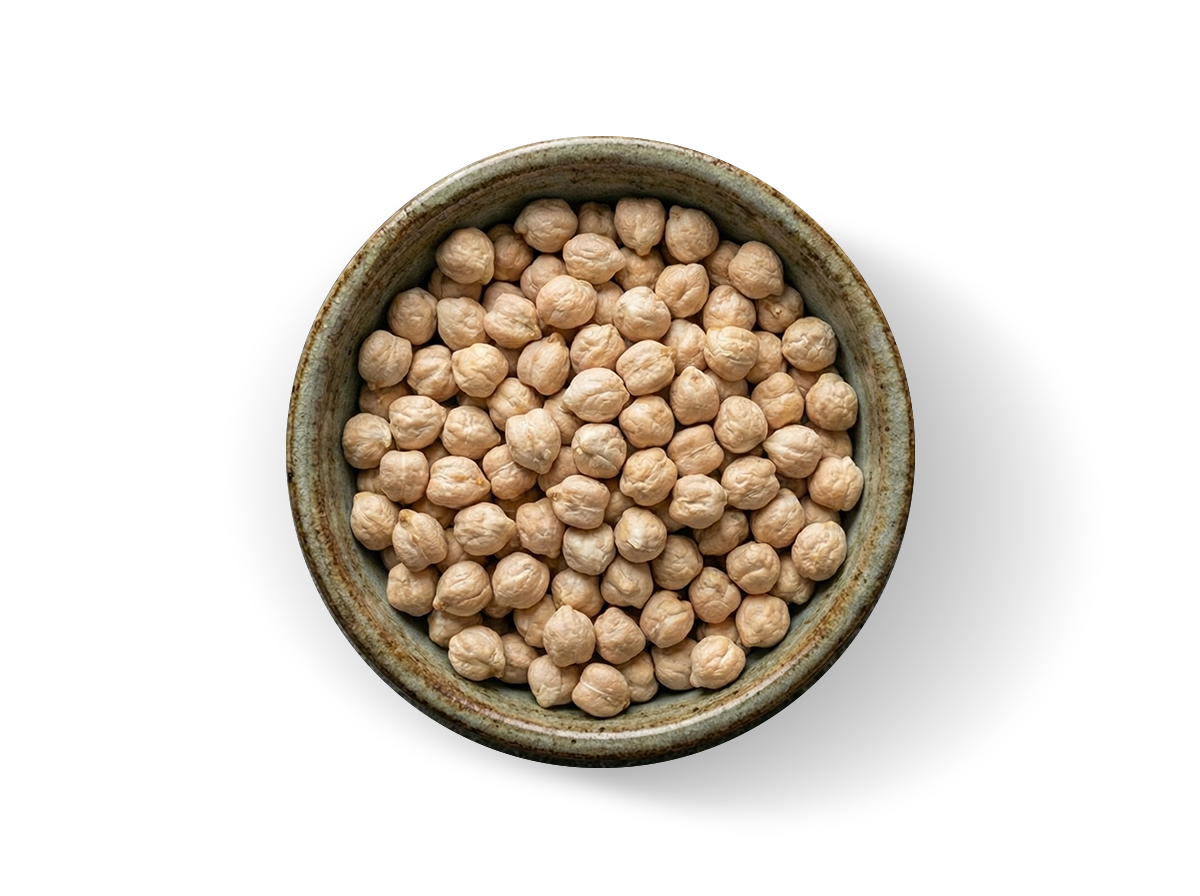
Chickpeas
Koçbaşı chickpeas are the „powerhouses“ among legumes: large, roundish grains that impress even when dry – and after cooking deliver exactly what you expect from really good chickpeas: a buttery-soft centre with a bite, a slightly nutty note and that rich, honest texture that „carries“ a dish. The flavour of this variety from Turkey remains pleasantly mild, allowing them to absorb spices, tomato, onion, garlic, cumin and olive oil particularly well – without losing their character.
This is exactly how classics like chickpeas with rice or a hearty stew are made: savoury, well-rounded, satisfying – yet not heavy. And they can also shine when served cold: in a salad with lemon and herbs, or as roasted chickpeas from the oven when you want a bit of crunch. Their versatility is evident every day: as a stew, as a side dish, in salads, roasted as a snack – or finely processed as a creamy base for dips.
Dere Koçbaşı chickpeas are vegan/vegetarian, protein-rich, high in fibre, and a plant-based source of iron – making them ideal for dishes that keep you full for a long time, take well to spices, and taste like proper home cooking.
Tips for preparing chickpeas
When you cook chickpeas, something special happens: after a while, hard, unassuming grains turn into a buttery, nutty base for loads of dishes – from stews to hummus. You don't need a professional kitchen for this, just a few basic rules.
First wash, then soak. Rinse dried chickpeas thoroughly in a sieve. Then soak them (usually overnight). And importantly: never eat them raw – legumes must always be cooked.
Soaking always makes sense. Chickpeas benefit greatly from this: shorter cooking time, more even cooking, often better tolerated. Rule of thumb: soak for 12–16 hours in plenty of water, then discard the soaking water and start again.
Cooking dishes that are easy to digest If you're sensitive: add caraway, fennel, bay leaf, or ginger to the pot. And occasionally skim the foam while cooking – this often makes it more pleasant.
Timing salt and acid correctly: It's better to add acid (lemon/vinegar/tomato) at the end or after cooking until soft – otherwise, the chickpeas will remain firm for longer. You can cook the salt in or season at the end (both methods work).
Control texture: Tender or extra creamy. For salads/stews, cook until tender and test frequently. For hummus & purées: cook until very soft for a creamier result. If you want it particularly smooth, you can easily remove the skins after cooking.
Good estates: Chickpeas love bold partners: garlic, cumin, paprika, onion, parsley, along with olive oil and lemon (at the end). For a „rounded“ dish: combine with rice/bulgur or with yoghurt.
Common Cooking Pitfalls
Don't they soften? It's usually due to soaking for too short a time, very old chickpeas, or adding tomato/lemon/vinegar too early to the dish. It's better to add acid only once the chickpeas are soft.
Do they taste floury or fall apart completely? Cooked for too long – or too high heat. For salads/bowls, it's better to try them earlier and leave them al dente; for hummus, they can deliberately become „buttery soft“.
Stomach rumbling / heavy in the stomach? Classic cause: Soaking water was cooked along with them, or they weren't rinsed thoroughly. Better: Soak, drain, rinse, then cook with fresh water. Spices like cumin, fennel, or ginger also help many people.
Tip for extra creamy consistency (Hummus): If you want it very fine, cook the chickpeas really soft – optionally with a hint of baking soda. But sparingly, otherwise it can easily taste „soapy“.