
So green – and yet full of history: Broad beans are not a „simple vegetable“ but one of the oldest cultivated plants ever. They were already grown thousands of years ago in the Mediterranean region and the Near East and were a real staple food for a long time – robust, high-yielding and easy to store. In many regions, they were considered a reliable „everyday bean“ that carried people through times when other foods were scarce.
The fascinating thing is that broad beans are a little miracle of nature, comprising skin and core. Thick, velvety pods protect the beans on the outside like packaging – while inside plump, bright green beans sit, which change when cooked: first crisp and fresh, then soft, creamy, and slightly „buttery“. They differ depending on ripeness: young beans taste more delicate and milder, while riper ones become stronger, nuttier, and a little earthier. And for those who like them particularly refined, they can even be „peeled“ out of their thin skins after blanching – this makes them especially velvety.
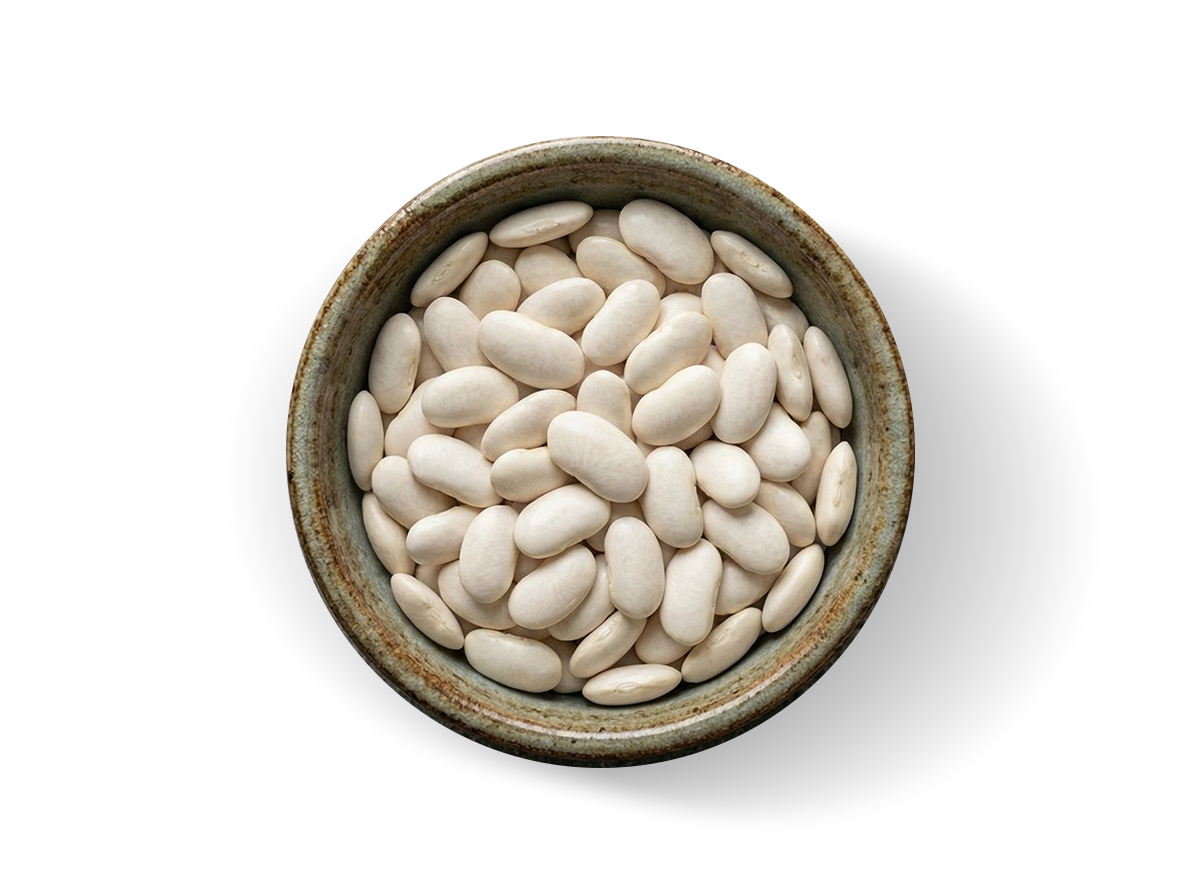
And in the kitchen, broad beans are astonishingly versatile: as a warm side dish with olive oil, lemon and herbs, as a hearty base for stews and braised dishes, as a creamy purée or dip, but also in stir-fries, salads or rice and bulgur dishes, where they provide texture and satiety. In short: these beans contain not only lots of protein and substance, but also tradition, seasonal enjoyment and real, characterful home cooking – and that's precisely what makes broad beans so exciting.
Tips for preparation
When you cook broad beans, something special happens: robust, bright green kernels are transformed into a dish that tastes nutty, mild, and pleasantly „filling.“ To prevent them from tasting mealy or bitter in the end, a few simple tricks suffice.
Recognise sorbet: fresh, frozen, or dried.
Fresh broad beans (mostly in their pods) require some preparation but are top in terms of flavour. Frozen broad beans are practical and quite consistent. Dried broad beans are in a league of their own: soak them, cook them for longer – but they are perfect for stews and hearty soups.
Peel twice – if you really want it to be fine.
For fresh (and sometimes frozen) broad beans, there's often a thicker skin around the bean. For tender results, blanch them briefly, then squeeze the beans out of their skins. This is particularly worthwhile for salads, purées or served plain as a side dish. For stews, the skins can usually be left on.
Don't overcook: cook gently, then they remain nutty.
Broad beans prefer gentle heat. Simmer or steam until tender, but not falling apart. If they are overcooked, they lose their flavour and quickly become mealy.
Timing salt and acid correctly.
Salt can be added from the start. It's better to add acid (lemon/vinegar/tomato) only at the end: Acid added too early can prolong cooking time and make the mouthfeel feel more „astringent“. At the end, however, a splash of lemon provides freshness – without a bitter aftertaste.
For a stew: build flavour – then it will taste „rounded“.
Dried beans benefit from base flavours: onion, garlic, bay leaf, a little carrot/celery, and optionally caraway or cumin (which also aids digestion). Skim off any foam that forms at the beginning, then simply let them simmer gently.
Good estate cars
Broad beans can be both: fresh and hearty.
Fresh Mint, parsley, dill, spring onion, lemon zest, yoghurt.
Hearty Bacon/ham, sucuk, lamb, potatoes, carrots.
„Serve “round" with rice, bulgur, or bread – and optionally with a bit of yoghurt or an egg for an extra protein boost.
Cooking pitfalls with broad beans (and how to avoid them)
Left it on, even though you want a fine result: The thick outer skin can appear leathery. For salads, purées, or served „plain“ as a side dish: blanch briefly, then peel twice (pod + skin). For stews, it usually doesn't matter.
Overcooked because the acid was added too early: Add lemon, vinegar, tomatoes and wine only at the end. Acidity can keep the beans hard for longer and quickly makes the mouthfeel „stringent“.
Overbought (floury, flat, grey-green) Broad beans, please simmer gently and test in good time. Overcooking removes flavour and makes them dry/floury.
Foam ignored with dried beans (cloudy flavour): During the first boil, foam often forms: skim it off briefly, then let it simmer gently.
Soaking incorrect (with dried beans): Not soaked = very long cooking time and unevenly soft. Better: soak, discard the water, start cooking again with fresh water (also makes it taste „cleaner“).