
Unassuming — yet full of strength: beans are among the oldest cultivated crops of humanity and have reliably nourished generations. Whether in Europe, Asia, or the Americas, beans found their place wherever people settled — thanks to their long shelf life, high satiety, and versatility across countless dishes.
What makes them fascinating: beans are not just a kitchen ingredient, but true specialists of nature. Their roots form a partnership with microorganisms that convert nitrogen from the air into a usable form. This enriches the soil, supports cultivation, and makes beans a quiet driver of sustainable agriculture.
And on the plate? Beans can do it all: they add depth to stews, make salads more satisfying, turn into creamy purées, spreads, or patties — all while offering a pleasantly balanced sense of fullness. In short, every bean carries a piece of culinary tradition, a touch of natural wisdom, and a remarkable amount of enjoyment.
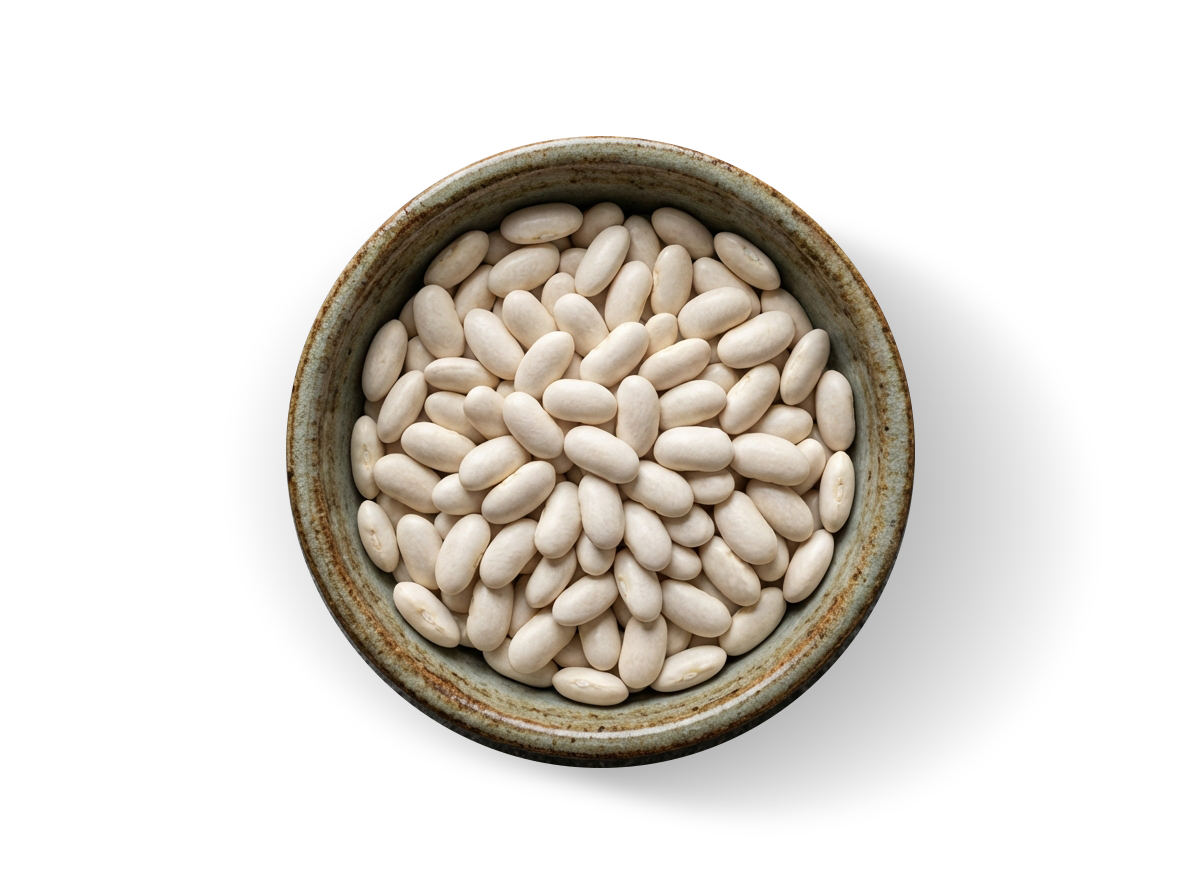
Cranberry beans (Borlotti beans)
Cranberry beans are the true “characters” among beans: cream-colored on the outside with reddish-brown speckles — and once cooked, they turn into tender, velvety kernels with a warm, slightly nutty aroma. Their flavor is pleasantly mild yet full of depth, which is why they pair especially well with herbs, garlic, onions, and olive oil. When cooked slowly, they remain soft and juicy without falling apart too quickly — perfect for dishes that benefit from a bit of time.
A classic that showcases this is Barbunya Pilaki: gently braised in olive oil with carrots, onions, tomatoes, and a splash of lemon — Mediterranean, aromatic, and often even better the next day. At the same time, cranberry beans are true all-rounders: in hearty stews, fresh herb bean salads, as a savory side to rice, in tomato-based sauces, or as a creamy base for vegetarian patties.
Dere cranberry beans fit perfectly into a plant-based kitchen: they provide plant-based protein and fiber, and naturally contain minerals such as iron — filling, versatile, and at home in many cuisines.
Black-eyed beans (black-eyed peas)
Black-eyed beans are the “light and summery” option among legumes: small, pale, and marked by their characteristic dark “eye” — and just as easy to work with in the kitchen. When cooked, they become pleasantly tender while keeping their shape, developing a delicate, slightly nutty flavor that pairs perfectly with fresh herbs, lemon, garlic, and olive oil. The result never feels heavy, but rather fresh, clean, and well-balanced.
A classic example is the Turkish black-eyed bean salad: black-eyed beans combined with onions, tomatoes, parsley, olive oil, and lemon — light, aromatic, and ideal as a meze. At the same time, black-eyed beans are true all-rounders: as a base for salads, in vegetable stir-fries, in mild stews, as a protein-rich addition to bowls, or even as a gently creamy filling for vegetarian patties.
Dere black-eyed beans are an excellent fit for a plant-based diet: they provide plant-based protein and fiber, and are naturally a source of minerals such as iron — versatile, filling, and easy to digest.
White beans (Turkish varietal diversity)
White beans are the “classics” among legumes — and especially popular in Turkish cuisine. What makes them interesting is their variety: different types offer different textures, from firm to creamy. When cooked, they absorb flavors like tomato, onion, garlic, and olive oil exceptionally well, developing a mild, slightly nutty taste — ideal for hearty comfort dishes.
A classic example is Kuru Fasulye: slowly simmered, rich in flavor, and pleasantly thick — depending on the variety, either creamy or more firm in texture. White beans also work well in pilaki-style dishes, stews, salads, and as a hearty side to rice or bulgur.
The Dere range includes popular varieties from Turkey: Çalı beans, Dermason beans, Horoz beans, Kırgız beans, and Şeker beans — each with its own unique character.
Dere white beans are vegan/vegetarian, provide plant-based protein and fiber, and are naturally a source of iron — perfect for a plant-focused diet.
Giant white beans
Giant white beans are the “showstoppers” among legumes: notably large, hearty, and pleasantly creamy once cooked — with a mild, slightly nutty flavor. Their size gives them a strong visual presence on the plate; when cooked gently, they often hold their shape while still absorbing sauces and spices beautifully.
That’s exactly why they are perfect for pilaki-style dishes: gently braised in olive oil with onions, carrots, tomatoes, and a splash of lemon — aromatic, tender, and often even more flavorful the next day. Giant white beans also work beautifully in hearty stews, Mediterranean salads, or as a creamy element in baked dishes.
Dere giant white beans are vegan/vegetarian, provide plant-based protein and fiber, and are naturally a source of iron — ideal for a balanced, plant-focused cuisine.
Kidney beans
Kidney beans are the “power beans” among legumes: deep red, firm in texture, and with a slightly earthy, pleasantly hearty flavor. When cooked, they usually hold their shape and add substance to dishes — ideal when you want a filling, robust base. They pair especially well with spices like cumin, paprika, chili, garlic, and tomato, without losing their own character.
That’s exactly why kidney beans are so versatile: in hearty stews, chili dishes, rice meals, salads, bowl recipes, or as a base for vegetarian patties. They bring color, structure, and a satisfying depth to any cuisine — whether oriental, Mediterranean, or international.
Dere kidney beans are vegan/vegetarian, provide plant-based protein and fiber, and are naturally a source of iron — ideal for a plant-based diet.
Mung beans
Mung beans are the “refined ones” among legumes: small, green, and with a mild, slightly nutty flavor. When cooked, they become pleasantly soft without falling apart too quickly — making them suitable for both light and hearty dishes. What’s especially appealing is how well they absorb spices and herbs, all while remaining light on the palate.
In many cuisines, mung beans are true all-rounders: in warming soups, creamy curries and dal dishes, vegetable stir-fries, or as a protein-rich addition to salads. They are also ideal for bowls, as they add structure while remaining easy to digest.
Dere mung beans are vegan/vegetarian, provide plant-based protein and fiber, and are naturally a source of iron — perfect for a balanced, plant-based diet.
Black beans
Black beans are the “flavor carriers” among legumes: deeply dark, with a bold character and a subtle, slightly earthy note. When cooked, they become pleasantly creamy on the inside while generally holding their shape — a combination that makes them especially appealing. They absorb spices exceptionally well and pair beautifully with ingredients like garlic, onions, tomatoes, cumin, fresh coriander, or lime.
In the kitchen, black beans are true all-rounders: in hearty stews, flavorful rice dishes, as a base for bowls, in salads, or as a creamy foundation for dips and spreads. Thanks to their color and texture, they instantly add depth and a rich, satisfying appearance to any dish.
Dere black beans are vegan/vegetarian, provide plant-based protein and fiber, and are naturally a source of iron — ideal for a plant-based diet.
Nutrition tip: make beans “smarter”
Beans are not only rich in fiber and protein — many varieties are also a plant-based source of iron. To help the body absorb this iron more effectively, the same kitchen trick used for lentils applies: pair them with vitamin C.
Practical pairings: bell peppers, tomatoes, parsley — or a splash of lemon at the end. (It’s best to add acidity at the end so the beans can soften properly.)
The 4 most important cooking pitfalls with beans
Not cooked thoroughly (especially kidney beans): Beans need to be cooked thoroughly — too short a cooking time or just letting them “sit in hot water” can be problematic.
Insufficient soaking / reusing the soaking water: Without soaking, many varieties take longer to soften and are often harder to digest. It’s best to discard the soaking water.
Cooking too vigorously: Boiling too vigorously can cause beans to split and fall apart. Better: bring them to a brief boil, then let them simmer gently.
Adding acidity too early (vinegar/lemon/tomato): Adding acidity at the beginning can keep beans tough. It’s best to season with it at the end.